

Electric Kettle Buying Guide: What Features Should You Look For?
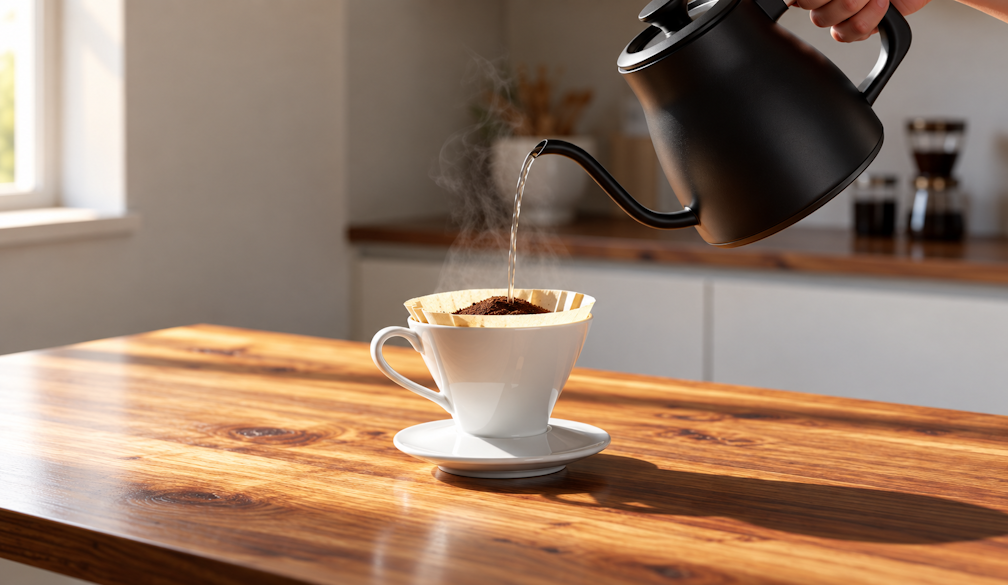
Whether you kick-start your morning with a strong cup of coffee or prefer winding down with a nice cuppa, having the right electric kettle really does make a big difference to your day. This electric kettle buying guide is here to help - covering all the key points Aussie buyers need to know. From size and temperature control to build quality and where to find the best deals for genuine AU stock.
Key Takeaways
- First off, you've got to decide whether you need a jug kettle or a gooseneck. If you're just boiling water for general use, a standard jug is the way to go. If you're a coffee aficionado or brewer of tea, a gooseneck gives you the control you need to get the job done.
- Variable temperature control (usually between 60-100 degrees) is worth paying for if you're a coffee connoisseur, brew green or white tea, or if you're preparing baby formula. For those who are just after a simple boil for a cuppa or instant meal, a basic boil-only kettle will do the trick.
- Build quality really is key. Look for something that's made from stainless steel or borosilicate glass, a solid Australian warranty and local AU plug and stock - that's exactly what ships out of Melbourne.
- When you're faced with two kettles that look pretty similar, then it comes down to energy efficiency, noise level and safety features like boil-dry protection and automatic shut-off.
1. How to Pick the Perfect Electric Kettle for Your Home
Its simple: match the kettle type and features to your actual hot water usage each day. If you're one of those people who spends all day boiling water, then you'll have different needs to someone who just brews a single coffee in the morning.
- Think about your main uses - boiling a cup of tea and instant noodles, precise pour-over coffee, baby formula or filling a French press.
- Make a list of your must-haves (size, temperature control, speed, budget) before you even start browsing, so you don't end up paying for features you'll never even use.
A 2-3 person share house in Melbourne will be happy with a standard 1.7 L jug kettle that boils faster than you can find the biscuits. On the other hand, a single coffee enthusiast in a studio will be after a gooseneck with digital temperature control and a hold function - a completely different kettle for a good reason.
2. Kettle Types - Jug vs Gooseneck vs Instant Hot Water Units
There are three main types of kettles and each one is designed for a different hot water user.
Standard jug kettles are the workhorses of the kitchen. You'll usually find them holding 1.5-1.7 L, boiling quickly and perfect for tea, hot chocolate, noodles and general kitchen use. They're often the cheapest option and the easiest to replace if something goes wrong after a few years.
Gooseneck kettles have a long, narrow spout that delivers a slow, controlled pour. The Fellow Stagg kettle is a popular choice for pour-over coffee, while the Bonavita kettle is a top pick for V60 coffee brewing. The OXO kettle heats water up quickly and pours well, making it another strong contender. Many gooseneck models come with digital temperature and hold-temp functions. If you mention pour-over in every coffee post, then this is the kettle for you.
Instant hot water dispensers and bench-top urns heat and dispense near-boiling water at the press of a button. Some instant hot water dispensers can hold 2.5 litres, while larger urns are perfect for offices or households with a lot of people who need hot water for tea rounds. They also make life a lot easier for elderly or mobility-impaired users who struggle to lift a full pot of boiling water. Focuses on electric benchtop appliances that suit Australian kitchens rather than built-in systems.
3. Capacity, Power and Boiling Speed
Capacity and power are what determine how much water you can boil at any one time and how long you'll be waiting. Getting these right can save you a heap of time and energy every day.
- Compact kettles for one or two people usually range from 0.5 to 1 litre. Most kettle capacities overall fall somewhere between 0.8 L to over 1.7 L - perfect for different sized households.
- Standard kettles hold about 1.5 to 1.7 litres - the sweet spot for most Aussie families.
- If you're cooking for a crowd or entertaining, you'll want a 2 L+ jug or urn that can dispense hot water in a hurry.Higher wattage in kettles means you get your water boiled much faster, and the power output is usually somewhere between 1500 W and 3000 W. Aussie kettles typically sit within the 1800 W to 2400 W range. You can expect to get a full litre of water boiled in about 3-4 minutes if your kettle is running at 2200-2400 W. Some of the travel kettles that are designed to be super portable may take 4-6 minutes or even longer to get the same job done - and that's not ideal when you're trying to get on with your day. Take the Stagg EKG kettle for example, it's a model that'll heat up faster at 1200 W than some of the other compact models, but what really matters to it is getting the temperature right, rather than being the fastest kid on the block. There's no getting around the fact that a kettle with higher wattage will be more efficient, but if you really want to save power then just boil the amount of water you need - it's not that hard to do and it's a lot quicker as well. If you notice that your kettle is tripping the circuit breaker, don't even think about sticking it into an overloaded powerboard - just use a dedicated wall socket instead.
4. Temperature Control and Coffee or Tea Brewing Needs
Temperature control is where the better kettles really stand out from the run-of-the-mill ones. If you think that a really good cup of coffee or tea needs to be made with the right water temperature, then keep reading.
Fixed-temperature kettles will boil the water to 100 °C and shut off - they do the job, no question. They work fine for black tea, instant coffee and cup noodles, so don't go thinking that they're any less useful.
Variable temperature kettles let you dial in the exact temperature you need - they often have presets and sometimes have a keep-warm or hold-temp function for up to 60 minutes. If you're into specialty teas or pour-over coffee, then variable temperature control is pretty much essential, as it lets you get the same great cup, week after week. Temperature control is also really important if you're brewing different types of tea, as each one has its own sweet spot:
- Green tea: around 80 °C\
- White tea: around 85 °C\
- Oolong: between 85-90 °C\
- Pour-over coffee (V60, Kalita, Aeropress): around 90-96 °C\
- Black tea and herbal infusions: 100 °C
If you get the temperature just right, you avoid scalding delicate coffee grounds (which can make the coffee taste bitter) and you also protect baby formula or nutritional powders that need to be mixed with non-boiling water. And if your kettle has a reliable digital display, you don't need to bother with a separate thermometer. Some coffee enthusiasts swear by models like the Fellow Stagg for pour-over, mainly because of the precision pouring and the stable temperature that it gives - once you've tried it, you'll probably find it hard to go back.
5. Materials, Build Quality and Design
The material that your kettle is made from will affect everything from taste to how easy it is to clean - and even how it looks sitting on your bench. Kettle materials include stainless steel, glass, plastic and ceramic, and each one has its own set of trade-offs.
- Stainless steel kettles are super durable and easy to clean, but they do get pretty hot on the outside during use. They're great for heavy users, because they'll keep going and going and they come in some really nice finishes that'll fit right in with your kitchen decor.\
- Glass kettles (made from borosilicate glass) let you see the water levels and the boil in action, which can be really handy - but be careful not to drop them, because they can crack.\
- Plastic kettles are usually pretty light and affordable, but it's worth making sure that they're BPA-free where they come into contact with water. Some people reckon that plastic interiors can affect the taste of your coffee or tea over time - which is one reason why many coffee enthusiasts prefer steel or glass.
- Ceramic kettles have a really authentic look, but they can be heavy and a bit fragile - so they're probably best for people who really want a kettle that looks special.
When it comes to pouring, a good electric kettles needs to have a handle that's comfortable to hold and a spout that's well-designed. It should be able to pour without making a mess and stay balanced, even when it's full. The Cuisinart 1.7 L kettle is a real favourite among users, and that's because it just feels like it's always going to do the job. Look for a kettle with a clear water level window and some nice markings on the side, and a style that you'll actually be happy to see every day.
6. Safety, Maintenance and Lifespan
Electric kettles are handling boiling water and mains power, so don't even think about cutting corners on safety.
- Safety features that you simply can't do without include automatic shut-off and boil-dry protection - it's just basic common sense.\
- A secure locking lid, a cool-touch handle and a 360° rotational base will all help with safe handling.\
- Cord storage can really help get rid of trip hazards in the kitchen.
When you're buying a kettle, make sure it's been made to Australian safety standards (which means it'll have both automatic shut-off and boil-dry protection), and that it's been shipped from someone who's going to give you a proper local warranty. Best to avoid grey imports if you can.Cleaning an electric kettle is easier with removable limescale filters and a wide enough opening to get in and properly clean it. A wide-opening lid makes cleaning and descaling a lot simpler. We recommend descaling every 4 – 6 weeks if you live in an area with moderate to hard water like Sydney, and even more often in areas where the water is super hard – like parts of Perth or Adelaide. White vinegar or citric-acid descalers work a treat, just be careful not to use any harsh abrasives that can damage the heating elements or the glass.
7. Price, Features and Buying
The price you're willing to pay for a kettle will depend on how often you boil water and whether you need any special features for making coffee or fancy teas. Kettles come in a range of prices to fit all sorts of budgets:
- Budget (~$30-60): A basic jug with no frills that just boils water – perfect for anyone who wants hot water fast and doesn't need all the bells and whistles.
- Mid-range (~$60-120): Better build quality, quieter boiling, some temperature settings, and removable filters – a good all-rounder.
- Premium (~$120-250+): Digital controls, holds temperature, gooseneck spout, and fancy finishes – the works! You can even get a stove-top gooseneck, but an electric model with built-in controls is way more convenient.
Some extra features to consider are: keep-warm mode, a real-time temperature display, quick-boil for just one cup, and compatibility with one of those smart plug things for semi-automatic kitchen set-ups.
Stocks the real deal Australian small appliances and home tech stuff, and it's all shipped from Melbourne with a local warranty and AU plugs – which is pretty comforting when you're plugging something into your wall every day. If you subscribe to the newsletter, you'll get 10% off your first purchase, and if you buy a kettle with some other kitchen or coffee gadgets you'll get free shipping over $150. Just match up the features and price to what's important to you – whether that's speed and value for families or precision and design for coffee snobs.


